
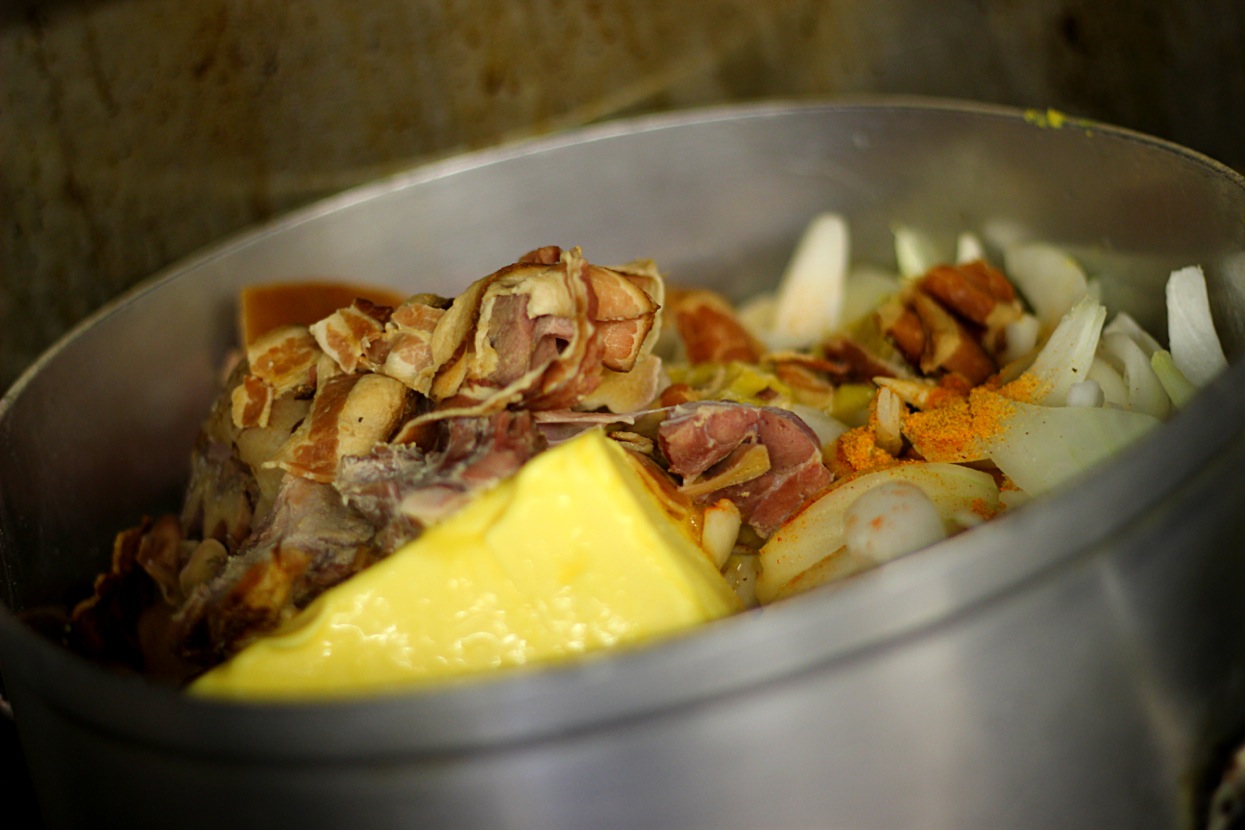
Ox tails are, quite simply, beef tail — cut into sections at the joints, with a good amount of bone, connective tissue, and marbled fat running through each piece. On paper, that does not sound like the description of a dish people plan their week around. In practice, it is one of the most requested plates we cook.
What slow cooking actually does
Ox tail is a tough cut. Cooked quickly, over high heat, it would stay chewy and largely inedible. The entire dish depends on time: hours of low, slow simmering, during which the connective tissue — collagen — gradually breaks down into gelatin. That is what gives a properly cooked ox tail its texture: meat that lets go of the bone with almost no resistance, in a gravy that has body and richness because of everything the bones and tissue released into it while cooking.
There is no way to speed this up without losing the result. A rushed ox tail is a chewy, disappointing ox tail. Ours cook for hours, which is part of why they only appear on certain days rather than every day of the week.
Why it is worth the wait
The gravy is really the payoff. By the time an ox tail is done, the cooking liquid has taken on so much flavour and body from the bones and fat that it is worth eating over rice or mashed potatoes entirely on its own. Regulars who order ox tails rarely order them without something starchy underneath specifically to make the most of that gravy.
It is also, historically, a dish that reflects the same nose-to-tail resourcefulness as the rest of our meat side of the menu — a cut that other traditions often discarded, turned through patience into something people now specifically request. If you come in on a day we are serving them and they are already gone, that is not an unusual afternoon for us. Come back on the next day they are on, and come a little earlier.